Swimming is a well-rounded sport suitable for all ages. However, people who spend many hours in the pool may be more exposed to certain factors that can also affect dental health.
Several studies have observed a higher incidence of tooth erosion among competitive swimmers, especially when training sessions are frequent and prolonged.
But does chlorine really damage teeth? The answer is more complicated.
What is dental erosion?
Tooth erosion is the progressive loss of mineral tissue from the tooth caused by the direct action of acids.
Unlike tooth decay, the acids responsible for erosion are not produced by bacteria in the biofilm, but may come from external sources—such as particularly acidic foods, beverages, or water—or from within the body, as occurs in cases of gastroesophageal reflux.
When teeth are frequently exposed to acids, the enamel can gradually become thinner and more vulnerable.
Does chlorine in the pool really damage tooth enamel?
Not necessarily.
Chlorine is used to disinfect swimming pool water, and when the system is properly managed, its presence does not automatically pose a risk of erosion.
The problem can become more severe, especially when the water’s pH is not maintained properly.
A landmark study of competitive swimmers described a swimming pool with an extremely acidic pH of 2.7, due to improper management of the chlorination system. The swimmers most exposed to this condition had a much higher incidence of enamel erosion.
This phenomenon, however, does not depend solely on pH.
In a study of young competitive swimmers, erosion was found in more than 26% of the competitive swimmers compared to 10% of recreational swimmers, even though the water’s pH was neutral. However, the water was undersaturated with respect to the minerals that make up the hydroxyapatite in tooth enamel.
For this reason, it is more accurate to speak of the chemical properties of water and the intensity of exposure, rather than attributing the problem simply to chlorine.
Who is most at risk?
The risk mainly affects those who spend many hours a week in the pool.
A casual swimmer’s exposure is very different from that of an athlete who trains every day for several hours.
Factors to consider include:
- number and duration of training sessions;
- years of experience;
- chemical properties of water;
- frequent consumption of acidic beverages;
- amount and characteristics of saliva;
- the possible presence of reflux;
- initial condition of the enamel.
A 2023 study found erosive tooth wear in 60% of the competitive swimmers examined, compared with 25.6% of the control group consisting of other athletes. The number of years of competition and regular consumption of acidic beverages were associated with an increased risk.
This does not mean that swimming inevitably causes erosion, but rather that intensive exposure warrants greater attention.
Sports drinks: another factor to consider
For people who exercise frequently, even what they drink during a workout can contribute to their teeth’s exposure to acids.
Sports drinks, energy drinks, and isotonic beverages may have a low pH.
The available evidence, however, does not support the conclusion that sports drinks alone necessarily cause tooth erosion in athletes. A 2025 systematic review found inconsistent results and emphasizes the importance of considering diet, frequency of consumption, saliva, and other individual factors together.
For daily hydration, water remains the most natural choice, while it’s best to avoid constantly sipping acidic beverages during very long workouts.
What signs should you not overlook?
Erosion can begin without any obvious symptoms.
Over time, the following may appear:
- smoother or shinier tooth surfaces;
- changes in the shape of the teeth;
- enamel that gradually becomes thinner;
- greater visibility of the dentin and a more yellow color;
- increased tooth sensitivity.
If you compete in swimming or spend many hours in the pool, it may be helpful to ask your dentist or dental hygienist to periodically check for early signs of tooth erosion.
How to Protect Your Teeth If You Swim Often
A few simple habits can help reduce acid exposure and protect your tooth enamel:
- drink water regularly during and after your workout;
- limit the regular consumption of sports drinks and acidic beverages;
- Avoid deliberately holding pool water in your mouth;
- maintain proper oral hygiene;
- Use a toothbrush without applying excessive pressure;
- undergo regular dental checkups.
After exposure to particularly acidic substances, it may be helpful to rinse your mouth with water. However, it is not necessary to strictly follow the rule of waiting a certain number of minutes before brushing your teeth: it is more important to use a gentle brushing technique and appropriate products.
The Role of Saliva and Oral pH
Saliva is one of the mouth’s natural defenses.
It helps dilute and remove acids, contains buffering systems —including one based on bicarbonate—and provides calcium and phosphate, which are involved in maintaining the mineral balance of tooth surfaces.
During intense physical activity, changes in saliva flow and characteristics may occur, which are also influenced by hydration, the duration of the activity, and individual characteristics.
For this reason, in regular swimmers, it is helpful to consider the combination of saliva, oral pH, diet, and exposure to acids—not just the pool water.
You can learn more about the role of saliva and pH on our page dedicated to theimportance of oral pH.
Cariex® in a Swimmer's Daily Routine
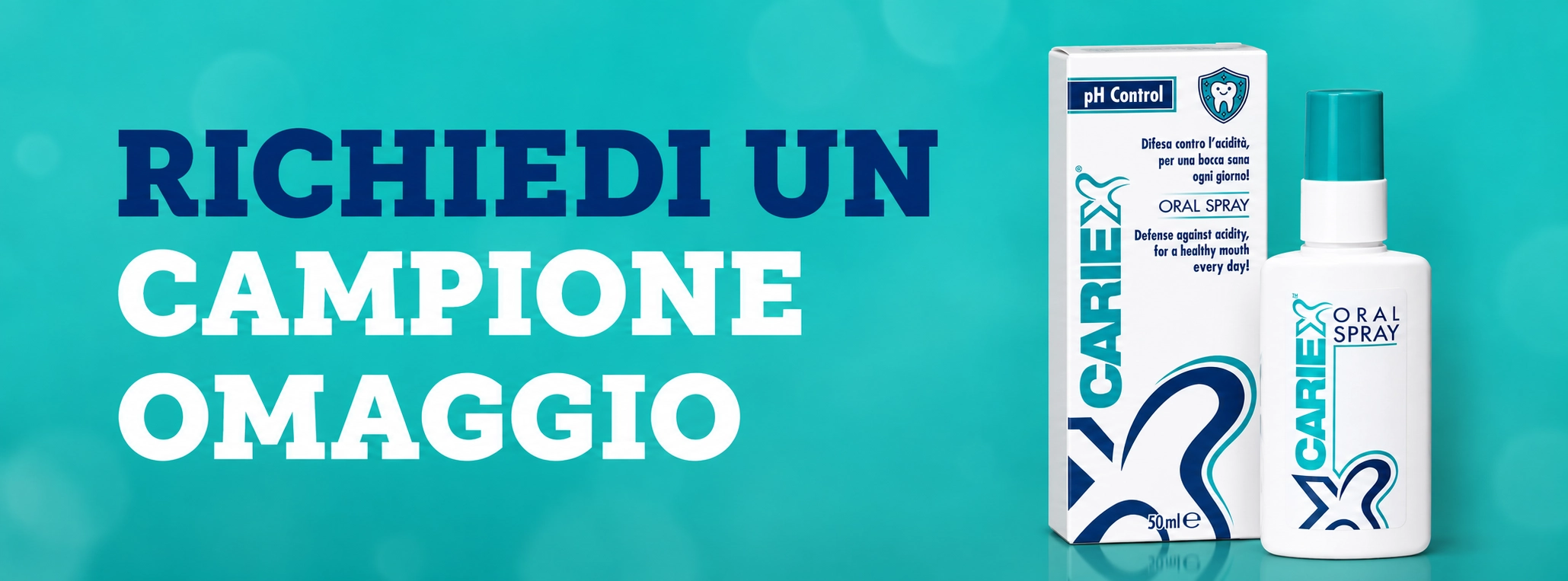
Cariex® is a CE-marked medical device in the form of a mucoadhesive spray containing sodium bicarbonate, xylitol, and hyaluronic acid, designed to help restore oral pH balance.
Its effect on salivary pH was evaluated in a study conducted in collaboration with the University of Insubria in Varese involving 50 healthy adults.
After rinsing with a glucose solution, Cariex® significantly reduced the duration during which the salivary pH remained below 6, with a gradual increase over the 40-minute observation period.
For swimmers , it can be incorporated into their daily routine after a workout, after meals, snacks, or drinks—especially when it’s not possible to perform normal oral hygiene right away.
Cariex® should not be considered a barrier against chlorine or pool water, and it does not replace standard preventive measures.
Instead, it can serve as a practical aid in restoring oral pH balance, as part of a routine that includes proper oral hygiene, hydration, limiting acidic beverages, and regular dental checkups.
For those who spend many hours in the pool, protecting your smile means taking a holistic look at your daily habits—not just chlorine.