Professional teeth whitening is one of the most popular cosmetic treatments, but temporary tooth sensitivity remains one of the most frequently reported side effects.
For dentists and dental hygienists, management should therefore not begin only when a patient reports pain after treatment: taking a medical history, evaluating the tooth surfaces, selecting the appropriate protocol, and providing home care counseling can all help make the treatment process more predictable and comfortable.
Why can teeth whitening cause sensitivity?
The main agents used in teeth whitening are hydrogen peroxide and carbamide peroxide.
Peroxide-derived molecules diffuse through enamel and dentin and interact with the chromophores responsible for pigmentation, altering their optical properties.
However, this same ability to diffuse allows the peroxide and its byproducts to reach the deeper tissues of the tooth. The sensitivity associated with teeth whitening is now attributed primarily to a transient pulp response resulting from exposure to peroxide.
It is therefore important to distinguish it from classic dentin hypersensitivity caused by exposure of the dentin tubules: the two conditions may produce similar symptoms, but they do not necessarily share the same underlying mechanism.
In most cases, post-bleaching sensitivity is temporary and tends to resolve after the treatment is suspended or completed.
Pre-Whitening Assessment
Before beginning treatment, it is helpful to identify any conditions that may require special attention.
The patient should be evaluated for pre-existing sensitivity, gingival recession, exposed dentin, erosion, cervical lesions, caries, cracks, or inadequate restorations.
Aesthetic expectations should also be discussed in advance: composite restorations, crowns, and other restorative materials do not respond to whitening in the same way as natural tooth structure, and this can result in color differences after treatment.
The initial consultation also provides an opportunity to identify habits that may affect the health of the tooth surfaces, such as frequent consumption of acidic beverages, gastroesophageal reflux, bruxism, or aggressive brushing techniques.
The sensitivity should therefore not be considered merely a side effect to be managed later, but rather a factor to be included in the patient’s overall evaluation.
Peroxide concentration and protocol: What does the evidence tell us?
Higher concentrations do not necessarily result in a better final aesthetic outcome.
An umbrella review published in 2026, which analyzed 24 systematic reviews on professional in-office teeth whitening, found evidence of moderate certainty that low-to-intermediate concentrations of hydrogen peroxide—roughly 25–35%— can achieve color results comparable to those of higher concentrations while reducing sensitivity.
Even in home protocols supervised by a healthcare professional, higher concentrations appear to be associated with an increased risk and greater intensity of sensitivity, although these generally remain at mild levels.
The choice of protocol should therefore take into account not only the speed of the result, but also the concentration, exposure time, individual characteristics, and the patient’s tolerance.
And what about the pH of the whitening gel?
The pH of the formulation also warrants attention, but it is important not to oversimplify the relationship between whitening, acidity, and sensitivity.
Not all whitening gels are acidic, and post-treatment sensitivity cannot be explained simply by a decrease in oral pH.
However, a scoping review published in 2025 highlighted that the gel’s pH can influence the response of dental tissues. Some clinical studies included in the review observed a higher risk and greater intensity of sensitivity with acidic formulations compared to gels characterized by a neutral and more stable pH.
The pH of the formulation is therefore one of the treatment variables, along with peroxide concentration, contact time, and the protocol used.
Lamps and lighting: Are they really necessary?
The use of LEDs, lasers, and other light sources has long been proposed as a way to speed up or enhance professional teeth whitening.
However, current evidence calls for greater caution.
The 2026 umbrella review did not find a consistent improvement in the final outcome with light stimulation and notes that certain modalities may increase sensitivity.
This does not mean that every light-based technology is useless, but it underscores the importance of evaluating the protocol based on the available evidence, avoiding the automatic assumption that higher treatment intensity equates to greater clinical efficacy.
How to Manage Tooth Sensitivity After Teeth Whitening
Several approaches have been studied to reduce sensitivity.
Among the most commonly used products are those containing potassium nitrate and fluorides, as well as toothpastes specifically formulated for tooth sensitivity.
Available reviews indicate that some of these interventions can reduce the risk or severity of sensitivity without significantly compromising the whitening outcome, although the extent of the benefit varies across protocols and studies.
It is also interesting to note what does not seem to work: the prophylactic use of analgesics or anti-inflammatory drugs has not shown a significant benefit in preventing sensitivity associated with professional teeth whitening.
Management should therefore be tailored based on the protocol used and the patient’s characteristics, avoiding preventive measures not supported by evidence.
After teeth whitening, do you really need a “white diet”?
One of the most common recommendations is to avoid coffee, tea, red wine, cola, and all strongly pigmented foods for a few days by following a so-called “white diet.”
However, the most recent evidence calls this recommendation into question.
A systematic review with a network meta-analysis compared patients on a diet free of pigmented foods with individuals who consumed coffee, tea, wine, cola, or grape juice, or who followed a diet without specific restrictions.
No significant differences in whitening effectiveness were observed.
Professional counseling may therefore be more helpful if it focuses on the overall health of the tooth surfaces rather than on strict color restrictions.
In a patient with erosion, exposed dentin, or tooth sensitivity, it may be advisable to assess whether the patient consumes acidic foods and beverages very frequently, regardless of their color.
Saliva, Habits, and the Oral Environment
Saliva remains a key component of the natural protection of dental tissues.
It contributes to the clearance of substances present in the oral cavity and to buffering capacity and the availability of calcium and phosphate involved in the mineral balance of tooth surfaces.
When counseling patients undergoing teeth whitening, it may therefore be useful to also consider hyposalivation, xerostomia, frequency of acid exposure, and dietary habits—especially when erosion or sensitivity is present.
The point is not to attribute post-whitening sensitivity to saliva or pH, but to integrate the cosmetic treatment into a broader assessment of the oral environment.
Where does Cariex® fit in?
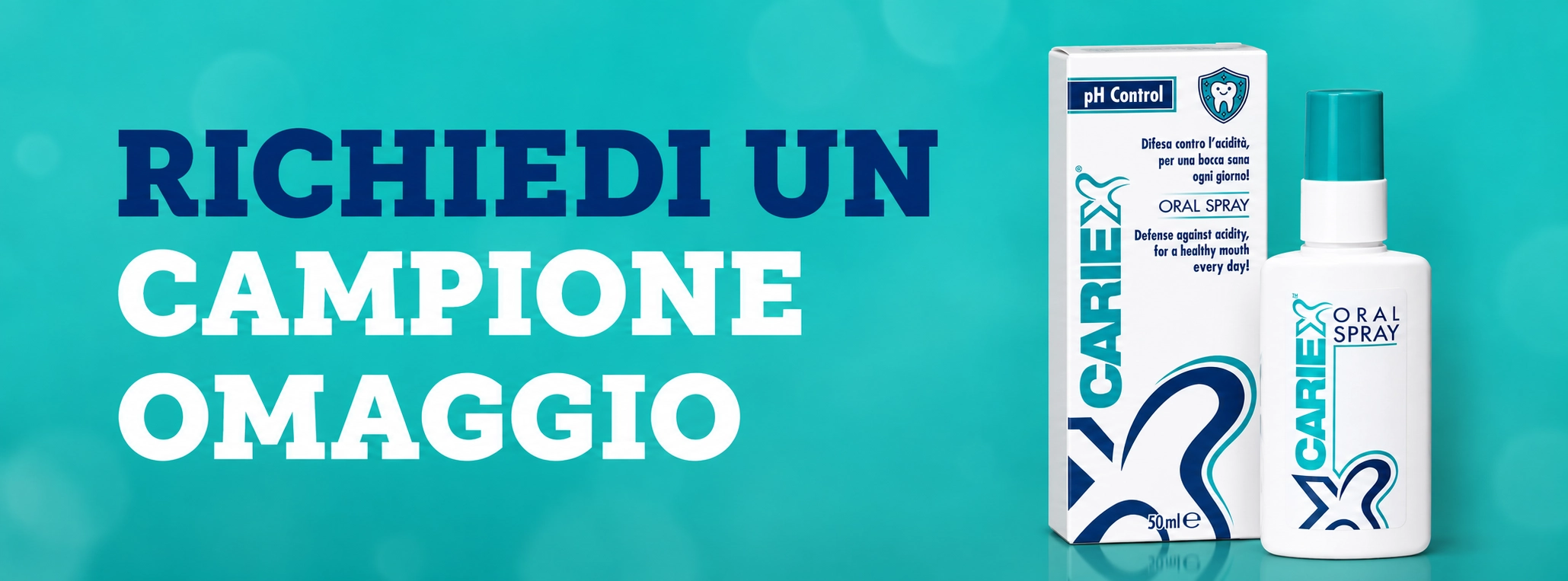
Cariex® is a mucoadhesive oral spray containing sodium bicarbonate, xylitol, and hyaluronic acid, formulated to help restore oral pH balance.
The effect of Cariex® on salivary pH was evaluated in a study conducted in collaboration with the University of Insubria in Varese involving 50 healthy adults. After rinsing with a glucose solution, use of the spray significantly reduced the duration during which salivary pH remained below 6, with a gradual increase over the 40-minute observation period.
In patients undergoing Cariex® teeth whitening, the treatment should not be presented as a specific treatment for post-bleaching sensitivity, because the available study did not evaluate this outcome.
Instead, it can be incorporated into home care as a means of helping to restore pH balance and promote oral comfort, especially in patients who are also frequently exposed to acids or have other conditions that call for greater attention to oral balance.
This distinction is important: professionally managing post-whitening sensitivity requires specific strategies, while maintaining good oral hygiene is a complementary part of the daily routine.
The Role of the Dental Hygienist in the Teeth-Whitening Process
Teeth whitening should not be viewed as a cosmetic procedure that is separate from the patient’s oral health.
Dental hygienists can play an important role in identifying risk factors, educating patients, and monitoring sensitivity, helping to distinguish a temporary reaction to treatment from preexisting conditions that require specific evaluation.
A thorough medical history, examination of the tooth surfaces, a carefully considered choice of treatment protocol, and at-home counseling allow us to combine aesthetic results, comfort, and prevention in a truly personalized approach.
References
Hajeer O, Hasan A. “In-office tooth bleaching protocols: an umbrella review of systematic reviews and meta-analyses on whitening efficacy and tooth sensitivity.” Saudi Dent J. 2026;38(4). PMID: 41896506.
Kwon SR, Wertz PW. “Review of the Mechanism of Tooth Whitening.” J Esthet Restor Dent. 2015;27(5):240-257. PMID: 25969131.
Terra RMO, Favoreto MW, Morris T, et al. “Effect of at-home bleaching agents and concentrations on tooth sensitivity: A systematic review and network meta-analysis.” J Dent. 2025;160:105891. PMID: 40484311.
Cabral AEA, Lourenço MAG, Santos BSM, et al. “Effectiveness of desensitizing toothpastes in reducing tooth sensitivity after teeth whitening: a systematic review.” Clin Oral Investig. 2024. PMID: 39078468.
Wang Y, Gao J, Jiang T, et al. “Evaluation of the efficacy of potassium nitrate and sodium fluoride as desensitizing agents during tooth bleaching treatment—A systematic review and meta-analysis.” J Dent. 2015;43(8):913-923. PMID: 25913140.
“The pH of Bleaching Gels on the Structural and Biological Response of Dental Tissues: A Scoping Review.” J Esthet Restor Dent. 2025. PMID: 40621622.
“A white diet is not necessary during dental bleaching treatment: A systematic review and network meta-analysis of clinical studies.” J Dent. 2024. PMID: 39557282.
Abbate GM, Levrini L, Caria MP. “Salivary pH after a glucose rinse: effect of a new mucoadhesive spray (Cariex) based on sodium bicarbonate and xylitol.” J Clin Dent. 2014;25(4):71-75. PMID: 26054182.
Are you a dental clinic or a dental health professional?