Many parents know the scenario all too well: even the calmest and most cooperative child suddenly becomes irritable, cries for no apparent reason, and refuses to eat. Could it be colic? Or perhaps the first teeth coming through? Or maybe those whitish patches on the oral mucosa?
Very often, the cause of this discomfort in infants and young children is oral thrush.
Causes of Oral Thrush in Children
Oral thrush, also known as oral candidiasis, is one of the most common childhood conditions. It is a fungal infection caused by Candida albicans, a fungus naturally present in our body with which we normally coexist in a stable balance. In infants and young children, however, this balance is harder to maintain. Their immune system and bacterial flora are not yet fully developed to control the multiplication of the fungus, which can therefore proliferate uncontrollably and cause infection.
Besides spontaneous onset, thrush can also be contracted in different ways – for example, during birth if the mother suffers from candidiasis, or during breastfeeding, whether at the breast or with a bottle. Candida is often found on the skin of healthy individuals and can pass to the baby’s mouth during feeding.
Artificial feeding also carries risks, since the baby does not receive the beneficial bacteria and nutrients found only in colostrum and breast milk, making them more vulnerable to infections.
Vaccinations and antibiotic therapies can temporarily weaken the immune system and intestinal microbiota, increasing susceptibility to thrush.
Symptoms of Oral Thrush in Children
The symptoms of oral thrush are easily recognisable: the presence of white patches on the child’s tongue, palate, gums, and inner cheeks should immediately serve as a warning sign. Take care not to scrape them off: unlike common and harmless milk residues, oral thrush lesions can bleed and cause further irritation when removed.
Because of the discomfort, the child often becomes irritable and refuses to eat. In more severe cases, fever, cough, and gastrointestinal disorders may also occur.
Thrush is not a condition that should overly alarm parents, but it must be treated carefully. Candida can easily spread to other parts of the body, such as the digestive tract (especially the intestines) and the diaper area, causing frequent dermatitis.
Treatment of Oral Thrush in Children and Infants
Preventing oral thrush in children and infants is unfortunately not straightforward. We can certainly do our best to limit the risk factors associated with this infection — paying particular attention to our own hygiene, sterilising all objects that come into contact with our baby’s mouth, such as dummies and bottle teats, and washing our hands thoroughly after every nappy change — but this may not always be sufficient.
Niente paura, comunque: il mughetto nei neonati e nei bimbi non è solo comune, ma è anche curabile senza troppe difficoltà.
One of the most frequently used treatments is antifungal therapy under medical prescription. The paediatrician will be able to advise on the most appropriate medication, and with a little care, a few days will generally be sufficient to resolve the issue.
Antifungals are not the only solution. Other products and measures can speed up recovery. In infants, under medical supervision, probiotics may be recommended to strengthen the immune system and bacterial flora. This should always be combined with proper hygiene for both the child and the objects and people they come into contact with.
If the child has already been weaned, paying the right attention to diet can also help overcome oral thrush. Candida has a “sweet tooth”, and reducing sugar intake through a healthy diet can help bring the microorganism back under control, weakening it and speeding up recovery. Limiting sugars does not only mean eliminating sweets and confectionery, but also keeping a check on quantities of overly sugary fruits, such as grapes and bananas, and sources of carbohydrates (rice, potatoes, bread, and pasta).
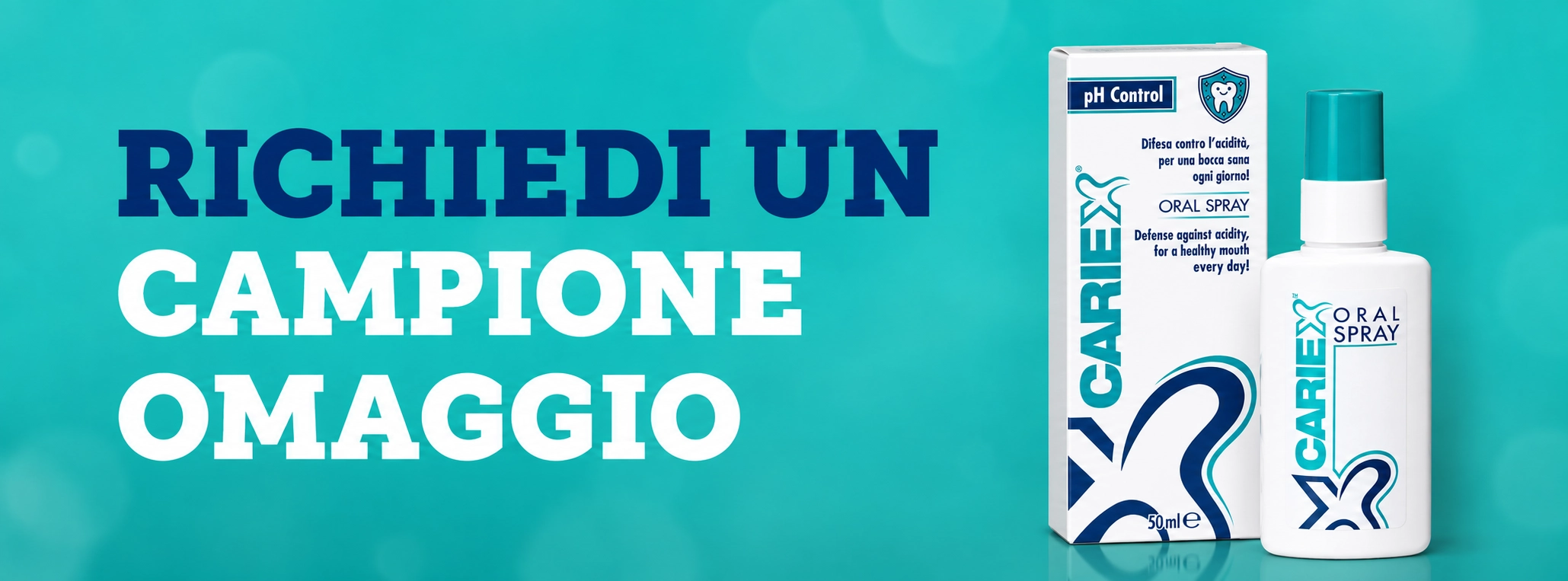
Significant help in treating oral thrush in children and infants comes from Cariex®. Designed to prevent the onset of cavities and dental erosion, this dental spray acts on oral pH and actively combats the harmful microorganisms that can compromise oral wellbeing. For this very reason, Cariex® helps create an environment unfavourable to the proliferation of Candida, making the treatment of oral thrush faster and alleviating the discomfort that young children may experience.
Cariex® is a medical device indicated for use in young children, as it is based on natural components. Its active ingredients (bicarbonate, xylitol, and hyaluronic acid) are formulated to adhere to the oral mucosa and provide immediate relief to the child. Furthermore, its spray formulation makes it easy to administer: no fuss over swallowing a tablet or a bad-tasting syrup. Simply spray onto the oral mucosa for rapid relief — and within a few days, oral thrush will be a thing of the past.