The term “thrush” refers to oral candidiasis, a type of stomatitis caused by Candida albicans.
Candida albicans is a fungus normally present in the human body in a latent form and usually does not cause any symptoms. However, under certain conditions that disrupt the body’s natural balance, the environment in which it lives can change. In the case of oral thrush, an acidic environment (acidosis) in the mouth promotes the overgrowth of Candida albicans, turning it from a harmless commensal organism into an aggressive pathogen.
Symptomatic candidiasis can affect different areas of the body, including the mouth (thrush), the vaginal area, the intestines, and the skin.
Oral thrush is particularly common in newborns during the first six months of life, due to the high concentration of lactose in the mouth during breastfeeding. It can also occur in children aged 3 to 9, as their immune systems are still developing.
Of course, oral candidiasis can also occur in adults whenever the immune system is weakened – for example during pregnancy, following debilitating illnesses, with the use of certain medications (antibiotics, corticosteroids), or in any condition that disrupts the balance of beneficial oral bacteria.
Signs of Thrush
Oral Thrush initially presents as widespread redness of the oral mucosa and tongue, which becomes smooth, shiny, and sore; after a few days, small dots and/or whitish patches appear, resembling “curdled milk” in appearance. These patches can often be wiped away with a gauze, revealing inflamed underlying mucosa that can be painful when swallowing and may sometimes bleed.
If left untreated, the fungal overgrowth can spread to the uvula, tonsils, and in more severe cases, reach the esophagus and respiratory tract.
Thrush: Remedies
At the first signs of thrush, it is important to intervene – not only to relieve pain and inflammation but, most importantly, to restore the oral environment and counteract the growth of fungi and bacteria.
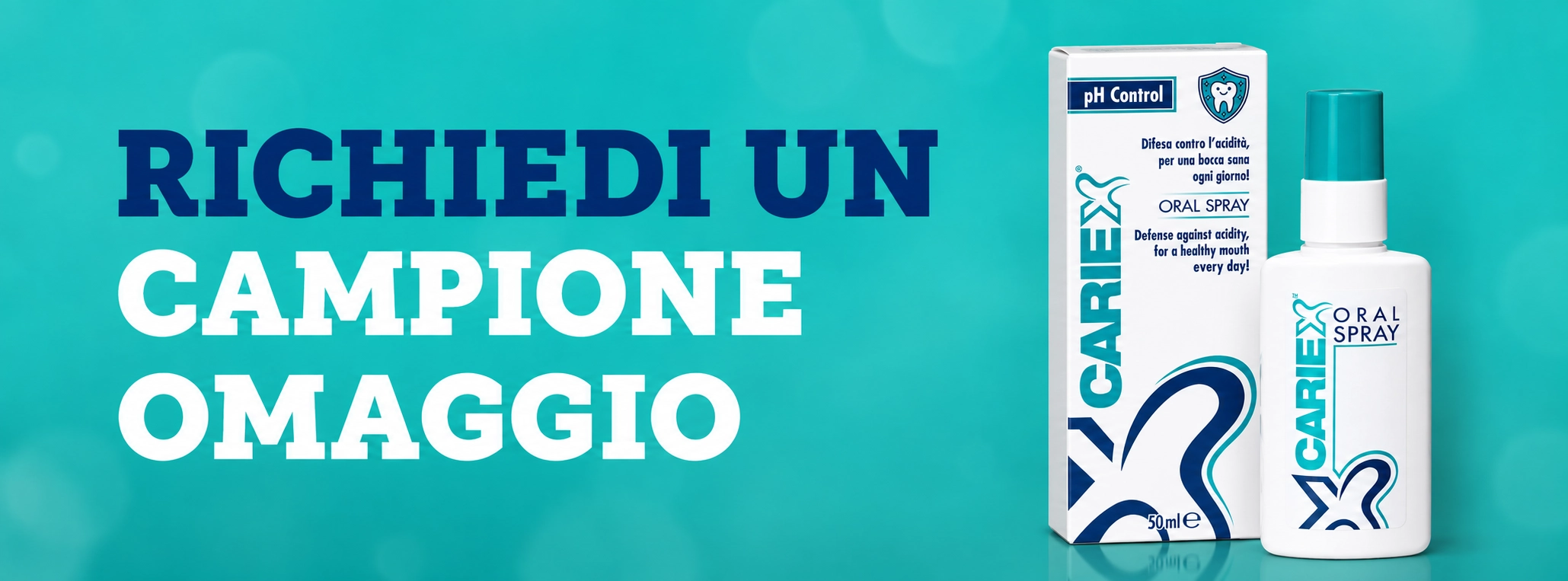
Cariex® dental spray stands out as a completely natural product containing Bicarbonate, Xylitol, and Hyaluronic Acid, and it can even be used in infants.
Bicarbonate, naturally present in saliva, helps neutralize acids, restore a neutral oral pH, and inhibit the growth of fungi and bacteria.
Xylitol, also known as wood sugar, is a natural antibacterial agent that helps prevent plaque formation.
Hyaluronic Acid is an excellent lubricant and moisturizer, ideal for soothing inflammation, relieving pain, and supporting the healing of oral mucosa lesions.
It is recommended to use 3/4 sprays of Cariex® in the oral cavity several times a day during the acute phase and after consuming food or drinks. Additionally, it should be used before bedtime, as salivary glands naturally produce less saliva at night, making the mouth more acidic.
For infants, 2 sprays of Cariex® are recommended after each feeding.
© 2014 by the YES Group, Inc – The Journal of Clinical Dentistry® – The International Journal of Oral Care Product Research: “Salivary pH After a Glucose Rinse: Effect of a New Mucoadhesive Spray (Cariex®) Based on Sodium Bicarbonate and Xylitol” – GM Abbate, DDS L Levrini, MS School of Dentistry and Oral Hygiene, University of Insubria Varese, Italy MP Caria, DDS, PhD Department of Public Health Sciences, Karolinska Institutet Stockholm, Sweden.