After a long night’s sleep, waking up may not always be a pleasant experience. Opening your eyes only to find your mouth dry and sticky is certainly not an agreeable sensation! Dry mouth at night is not in itself a disease, but rather a symptom that can be managed with a few simple measures and a helping hand from nature.
But what causes this bothersome symptom?
Causes of Dry Mouth
One of the most common causes of waking up with a dry mouth… isn’t directly related to the mouth itself! In the presence of nasal obstruction caused by a cold, sinusitis, or a deviated nasal septum, it is quite normal to find oneself sleeping with the mouth open. This habit results in the evaporation of the saliva that naturally lubricates the oral cavity. As a consequence of this sleeping pattern, the mucous membranes of the mouth, the cheeks, and the surface of the tongue dry out, giving rise to that unpleasant sticky sensation upon waking.
This situation is further aggravated in those who suffer from sleep apnoea — that is, those who have a tendency to hold their breath during sleep. This is a breathing disorder, very common among those who tend to snore frequently at night. Problems of this kind result in a tendency to resort to mouth breathing, and — as in the case of nasal obstruction — this leads to dehydration of the oral mucosa during sleep.
Sometimes the cause of dry mouth at night is not related to physical problems but to poor habits that can be addressed — such as insufficient fluid intake. Saliva is composed almost entirely of water; while during the day it is easy to drink frequently and therefore provide enough “raw material” for saliva production, at night we can only rely on the reserves accumulated during waking hours. Thus, if we do not drink enough during the day, oral hydration will suffer during sleep and the mouth will feel unpleasantly dry upon waking.
Still in relation to the body’s hydration level and its effect on nocturnal dry mouth, it is advisable to refrain from consuming caffeine and alcohol before going to bed. Not only can these substances interfere negatively with sleep, but they are also dehydrating, thereby worsening the condition of dry mouth.
Certain diseases — such as diabetes, Sjögren’s Syndrome, and autoimmune disorders such as rheumatoid arthritis — count dry mouth among their symptoms. During the night, this symptom can become more pronounced. The same can be said for certain medications, from common antihistamines used for allergies to various chemotherapy and radiotherapy drugs.
Finally, all of these causes have an even greater impact in the case of older individuals. On one hand, reduced fluid intake during the day — with consequent generalised dehydration — becomes more common with age; on the other, it has been scientifically demonstrated that as we age, the composition of saliva changes, making it less effective in its role of maintaining oral hydration.
Natural Remedies for Nighttime Dry Mouth and Healthy Habits
A first, simple remedy for waking up free from the discomfort of dry mouth is to make the bedroom a healthy and comfortable environment. It is important to ensure that the place where we spend our nightly hours has an adequate level of humidity, as dry air is a significant factor in the dehydration of the mucous membranes. The use of a simple room humidifier may be sufficient to achieve this.
Pay attention to the oral care products you use: many mouthwashes contain alcohol, which – even when used locally and not ingested – can contribute to drying out the mouth.
Drink plenty of fluids during the day, favoring water, herbal teas, and unsweetened infusions. It’s also helpful to keep a glass or bottle of water on your bedside table so that, if you get thirsty during the night, you can take a few sips without getting up. Sometimes a little convenience makes all the difference!
Another good daytime habit to promote restful sleep is limiting very salty foods (which benefits the whole body, not just the mouth) as well as spicy or heavily seasoned foods, especially at dinner.
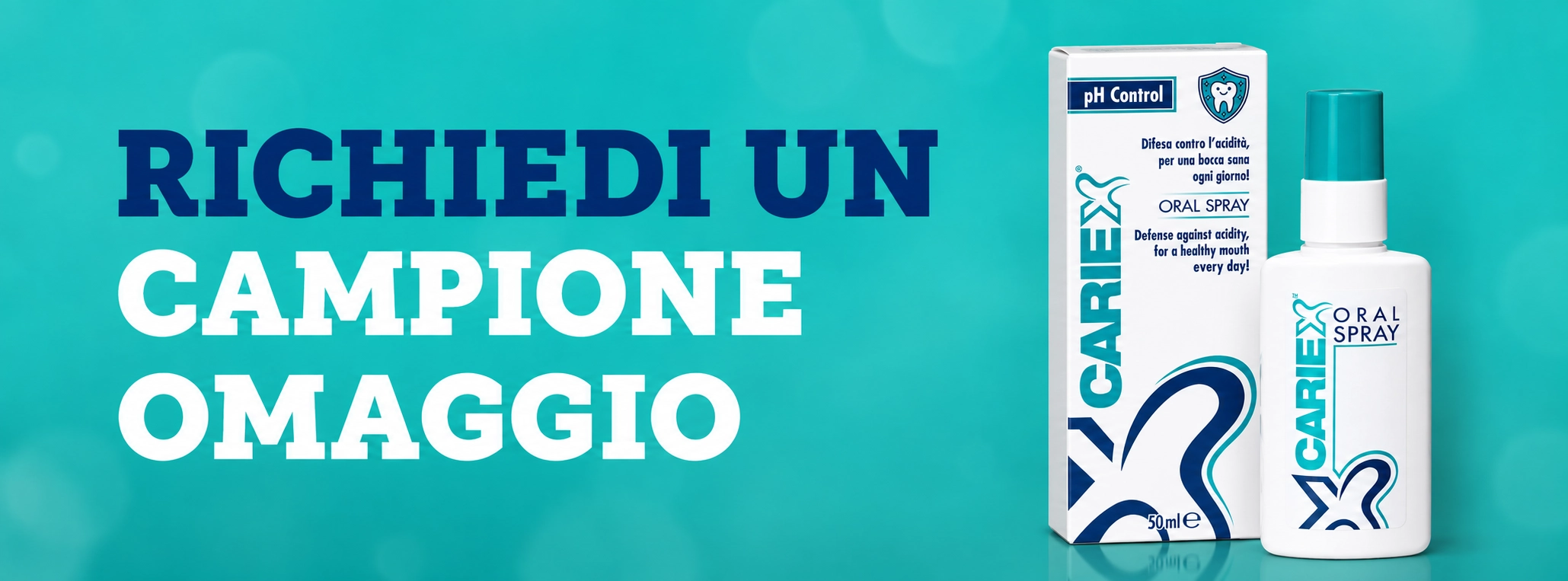
Finally, if we wish to get the most out of these healthy habits — or if lifestyle changes alone prove insufficient to remedy the discomfort of dry mouth during sleep — nature offers a solution that can transform our nights: Cariex®, an oral spray that compensates for the insufficient action of saliva. This spray contains natural active ingredients, including bicarbonate — useful for balancing oral acidity — xylitol — indicated for restoring tooth mineralisation — and hyaluronic acid — a moisturising agent naturally present in our cells. Just a few sprays can help keep the mouth well hydrated, reducing the sensation of dry mouth upon waking.