A persistent feeling of dryness in the eyes and mouth can be a sign of Sjogren’s syndrome. First identified in the 1930s by Swedish ophthalmologist Henrik Sjogren, the condition was initially linked to rheumatoid arthritis in some patients.
Today we know that it is an immune disorder characterised by two common symptoms: dry eyes and dry mouth. Sjögren’s Syndrome is often associated with other autoimmune diseases, such as lupus or rheumatoid arthritis — conditions that affected the women studied by the discoverer of the disease.
Come in tutte le malattie autoimmuni, il problema insorge nel momento in cui il nostro organismo “attacca” se stesso, perché il sistema immunitario riconosce parti del corpo come agenti esterni dannosi, e quindi da contrastare. In the specific case of Sjögren’s Syndrome, the mucous membranes and glands of the eyes and mouth are primarily targeted. This results in a reduction in the secretion of tears and saliva respectively, leading to the most classic symptom of the syndrome: dry eyes and dry mouth.
Who Is Affected
Sjogren’s syndrome can affect anyone at any age, but it is most often diagnosed in people over 40. Women are particularly at risk, being nine times more likely than men to develop the condition.
After rheumatoid arthritis and systemic lupus erythematosus, Sjogren’s is the most common autoimmune rheumatic disease, affecting roughly 0.4-0.6% of the population.
Risk factors include having a first-degree relative with an autoimmune disease or having an autoimmune condition yourself. This aligns with the initial studies conducted by the syndrome’s discoverer, who linked it to rheumatoid arthritis: Sjogren’s syndrome occurs in 30-50% of people with rheumatoid arthritis and in 10-25% of patients with systemic lupus erythematosus.
Symptoms
The main symptoms of Sjogren’s syndrome affect the eyes and mouth, causing pronounced dryness of the mucous membranes. In the eyes, this results in reduced tear production, leading to poor lubrication and discomfort.
In the mouth, Sjogren’s syndrome causes xerostomia, or dry mouth. This condition can present in several ways: you might feel that food – especially dry items like bread or crackers – sticks in your mouth or throat due to reduced lubrication, or you may experience increased thirst and the need to drink during meals to help with swallowing. It can also affect your sense of taste, often causing a bitter or metallic sensation, and may lead to inflammation or numbness of the tongue.
Xerostomia can affect the overall health of the mouth, leading to issues such as gum inflammation, an increased risk of cavities, and heightened susceptibility to bacterial and fungal infections. These problems are directly linked to insufficient saliva production.
Saliva plays a very important role in maintaining oral pH balance. The oral cavity tends to become acidic after meals; after approximately forty minutes, saliva is able to neutralise the pH. However, if saliva is produced in insufficient quantities, even this buffering capacity is not enough to restore neutrality. This persistent acidic condition is harmful both to the teeth — which undergo demineralisation, enamel erosion, increased sensitivity, and greater susceptibility to microbial attack — and to the mucous membranes, as harmful microorganisms thrive in an acidic environment, thereby exposing us to the risk of cavities, stomatitis, and fungal infections such as oral candidiasis.
Treatment and Management
At present, there is no cure for Sjögren’s Syndrome. However, it is possible to intervene to alleviate the symptoms. Consult your doctor to receive a correct diagnosis and guidance on the most appropriate treatment for your needs.
For dry eyes, your doctor may prescribe artificial tears and eye drops.
To relieve the discomfort of xerostomia, lifestyle changes can be very helpful. For example, smoking irritates and dries out the oral mucosa, so quitting smoking is essential for maintaining the health of your mouth – and your overall well-being.
Drinking plenty of fluids can help relieve the constant thirst and dry mouth caused by Sjögren’s syndrome. Be sure to choose drinks that are neither sugary nor acidic (such as many sodas), as these can damage your teeth and make your mouth more prone to fungal infections. Alcohol and coffee should also be avoided, as they can worsen dry mouth.
Whenever possible, it is advisable to breathe through the nose rather than the mouth. A blocked nose due to a cold or allergy may force us to breathe through the mouth, and the flow of air only worsens the dryness of the mucous membranes. In this case, try using a saline nasal spray to clear the nose and restore correct breathing.
As we have seen, Sjögren’s Syndrome makes maintaining proper oral hygiene absolutely essential. To avoid an increased risk of cavities and gingivitis, remember to brush your teeth after every meal, without neglecting the use of dental floss and regular visits to your dentist. Add antibacterial mouthwashes or sprays to your routine to complete the treatment. These measures help maintain a neutral pH, and therefore a healthier mouth.
Low saliva production, as mentioned, is one of the main symptoms of the disease. Restoring proper salivary function is an important step in combating oral dryness. It is possible to stimulate saliva production by using sugar-free candies or chewing gum, which won’t increase the risk of cavities. When this isn’t sufficient or feasible, salivary substitutes are recommended: acting as “artificial saliva,” these products are more effective than water at restoring proper mucosal hydration, thanks to ingredients that provide longer-lasting lubrication.
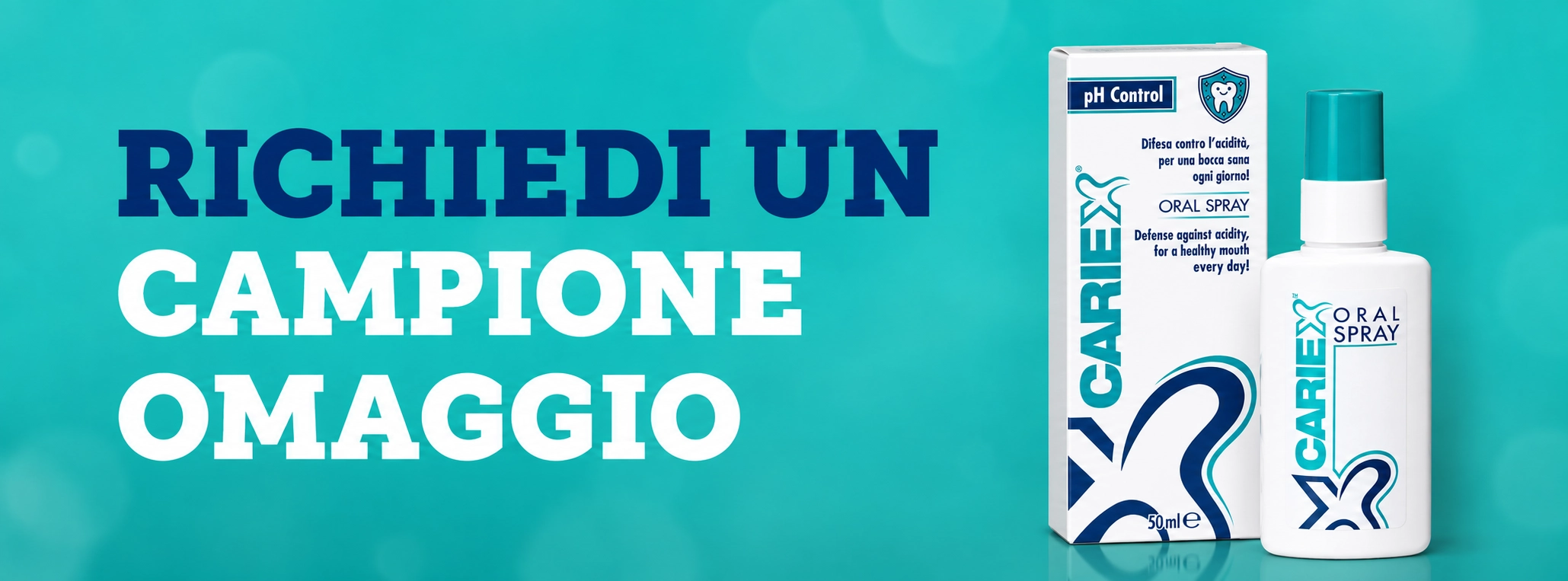
In this context, Cariex® can be a great ally: this dental spray is designed to adhere to the oral mucosa, providing immediate relief from dry mouth discomfort. Thanks to the bicarbonate in its formulation, Cariex® helps restore the mouth’s pH, reducing the risk of cavities; xylitol provides antibacterial and anti-inflammatory benefits, while hyaluronic acid enhances mucosal hydration and supports healing.
Using Cariex® after every meal instantly reduces oral acidity. Acting as a saliva substitute, Cariex® also helps restore a neutral pH in the mouth, keeping it healthier and stronger against infections.