The term pH has become increasingly common in our everyday vocabulary, but few people know its origin. pH refers to a scale used to measure acidity and was introduced in the early 1900s by the chemist Søren Sørensen. The term comes from the German “Potenz Hydrogen”, meaning the power of hydrogen.
The pH scale ranges from 0 (very acidic) to 14 (very alkaline). For example, pure water has a pH of 7.07, while most fruits are generally acidic. The stomach environment is also highly acidic, ranging from 1 to 1.6.
Overly acidic environments often promote bacterial growth, which is why it is important to understand the pH of the foods we eat and take steps to counteract their effects.
There are various types of acids: citric acid in citrus fruits like lemons, malic and benzoic acids in plums, berries, and apples, and tannic acid in coffee, tea, unripe fruits, and red wine (in these cases, only excessive amounts can cause imbalances in the body).
These acids, along with the fruits and vegetables that contain them, are not harmful when consumed in moderation. It is important to balance them with alkaline foods, such as vegetables and dairy products, and to maintain proper oral hygiene to protect tooth enamel.
| ACIDIC FOOD – pH < 4.5 pH | pH |
| Apples | 3.4 |
| Strawberries | 3.5 |
| Lemon Juice | 2.4 |
| Peaches | 3.8 |
| Pears | 4.1 |
| Tomato Juice | 4.3 |
| Orange Juice | 3.7 |
| Tomato | 4.2 |
| Vinegar | 2.9 |
| Cola | 2.5 |
Acidity and Oral Health
Our saliva is naturally slightly alkaline and helps protect tooth enamel from erosion between meals. However, when saliva becomes more acidic, it allows bacteria to multiply and produce additional acids, which can attack the enamel.
The foods mentioned above are often harmful to teeth, yet beneficial for the body overall: so what should we do?
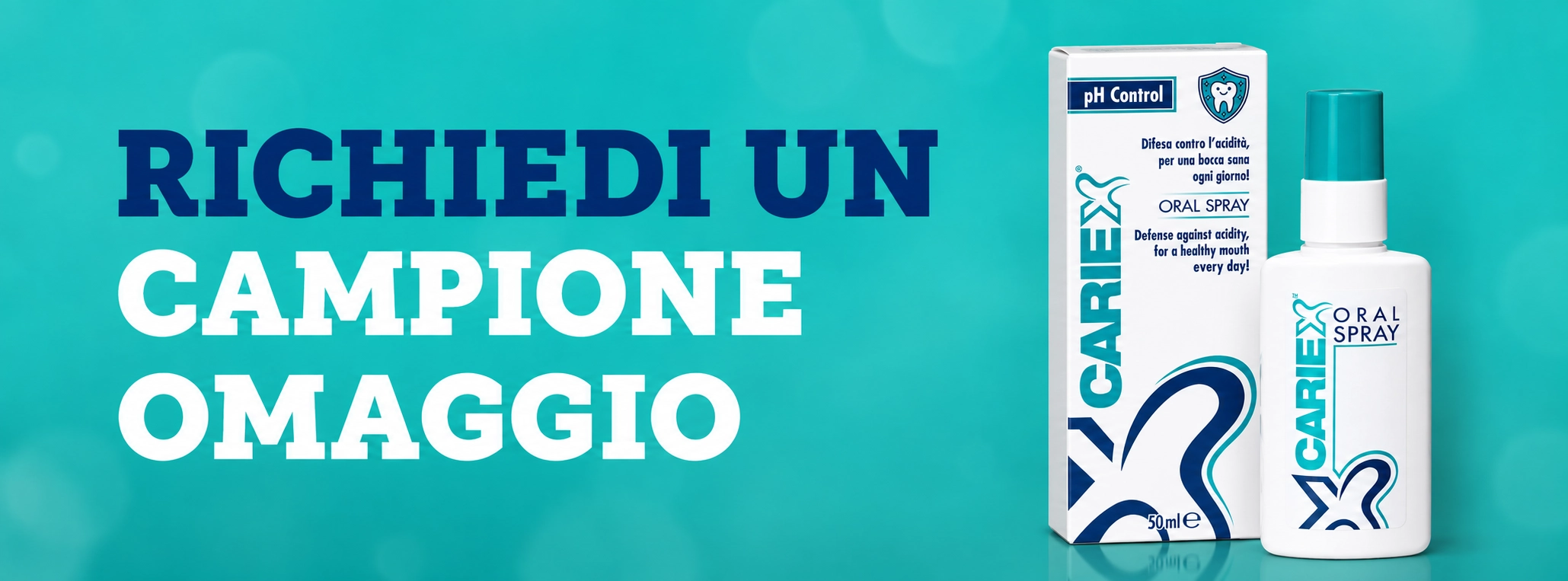
A few sprays of Cariex® immediately after eating and drinking help neutralise the acidity of food and support the buffering capacity of saliva, preventing enamel demineralisation. Cariex® is also recommended before brushing, to avoid having to wait the customary 30–40 minutes, and above all before going to bed, to counteract nocturnal dry mouth — which often creates an acidic environment and exposes the teeth to prolonged demineralisation.