We’re always told that permanent teeth are meant to last a lifetime, so it’s only right that we take the best possible care of them. This is made possible by adopting a healthy, balanced lifestyle. However, there are situations in which this delicate balance is disrupted.
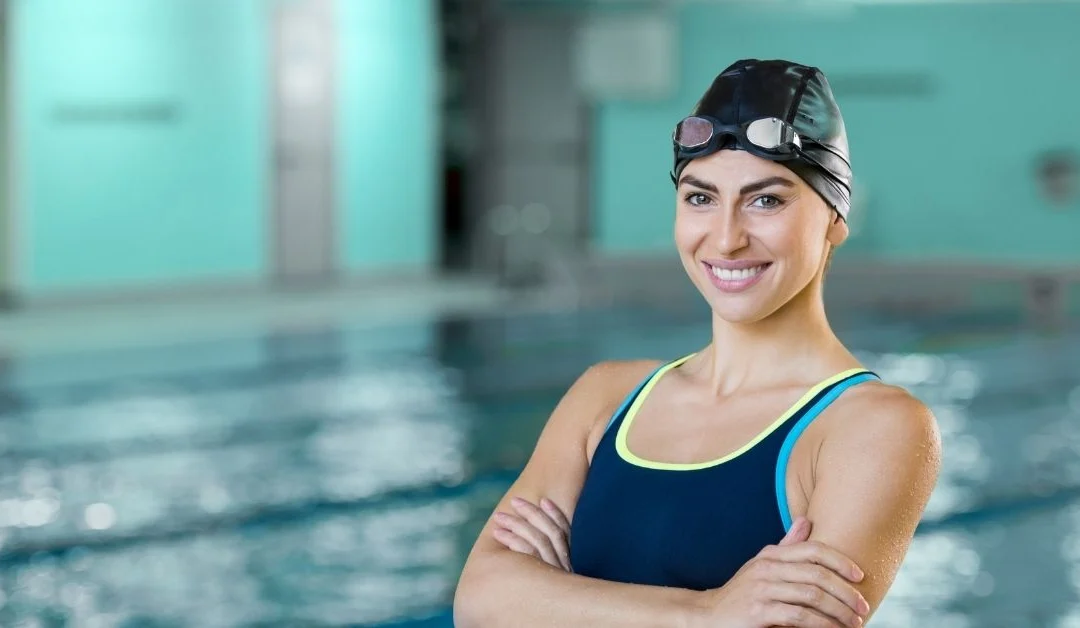
In this brief literature review, we examinedental erosion— that is, the progressive loss of tooth surface caused by a nonbacterial acid source— in swimmers.
Dental Erosion: Triggering Causes
The underlying cause lies inthe excessive acidity of the environment: for erosion to occur, the pH of the solution must be below 5.5 for enamel and below 6.0 for dentin.
This situation arises when the source of acidity is intrinsic (such as gastroesophageal reflux and episodes of vomiting) or extrinsic (caused by medications and dietary supplements). In addition to these two categories, we must also include those who may be or are exposed to acidic environments for professional reasons, such as swimmers.
It is worth noting that according to the latest WHO guidelines from 2006, the pH of swimming pool water using chlorine-based disinfectants should be maintained between 7.2 and 7.8, well above the 5.5 threshold mentioned earlier.
Not all swimmers or pools are under the same conditions, and ideally, swimmers should be in perfect dental health. Oral diseases negatively impact quality of life and can reduce performance during training and competition, causing pain, anxiety, lack of focus, and ultimately suboptimal results.
Dental Erosion: Professional vs. Amateur Swimmers
A further important distinction is between professional and amateur swimmers: competitive swimmers — those training for longer hours in the water — have shown a higher incidence of dental trauma and staining compared to non-competitive swimmers. This may be attributed to the chemical substances used to disinfect pool water and the time spent in swimming pools: physical exertion becomes sufficiently vigorous to allow contact between the water and dental surfaces. As a general rule, more than 6 hours of training per week are required to increase the risk of dental staining.
Some studies report cases where inconsistent pool pH control caused dental erosion – even severe cases within just two weeks. If this exposure is combined with the consumption of sports drinks, the risk of developing erosive lesions increases, although this remains debated in the literature.
The pathogenic mechanism of dental erosion is based on the dissociation of hydroxyapatite and the reduced mineralization of the dental hard tissue due to prolonged and frequent acid exposure.
In fact, our body neutralizes the effects of acid attacks by relying on the buffering capacity of saliva, which restores the proper pH in the oral cavity in approximately 30-40 minutes.
However, this ideal scenario is rarely reflected in daily sports practice, as exposure to the chemical agent can be prolonged, and salivary flow may also be reduced during intense physical exercise due to dehydration.
In fact, the likelihood of developing dental erosion was found to be 5.3 times higher among swimmers with more than three years of swimming experience.
The alarming aspect that warrants reflection is that over 80% of those surveyed did not consider their situation to be a cause for concern in terms of health, and therefore did not feel a dental visit was necessary. The only reason a swimmer visits the dentist for a check-up is due to problems of dentinal hypersensitivity caused by excessive erosion; this suggests that hypersensitivity may be a reliable indicator of dental erosion.
It is therefore the responsibility of the dental community — those tasked with monitoring the condition of the oral cavity — to proactively manage the onset of erosive lesions. The natural consequence of this is an effective approach to erosion management through screening for early signs of erosion and the assessment of all aetiological factors.
Dentists and dental hygienists must carefully evaluate the erosive potential of the various beverages and foods consumed by the patient, as well as exploring, through targeted questions, the patient’s sporting habits — which, as we have seen, are of fundamental importance.
How to Counteract Demineralisation and Dental Erosion
What alternatives do we have today?
First of all, the worst thing to do is to recommend brushing teeth immediately after swimming: this can be harmful because the tooth surface is softened by the acidic chlorine.
There are several alternatives, and as we’ll see, not all of them are practical in a competitive training setting.
The literature primarily suggests to take advantage of the remineralizing properties of milk and cheese as both contain higher concentrations of calcium and phosphate ions compared to saliva. A variation of this approach involves the use of fluoridated milk, which has been shown to provide protective effects against enamel erosion caused by low‑pH swimming pool water. Applying fluoridated milk both before and after erosive exposure yields the strongest protective benefits. Another option is fluoride itself, though its effectiveness against erosion remains somewhat controversial. Promising results have been observed only with high concentrations of fluoride found in varnishes and foams, rather than in everyday toothpastes.
Fluoride is well known for improving remineralisation and significantly reducing demineralisation in mildly acidic environments. Another alternative involves the adoption of solutions such as chewing gum containing bicarbonate, as it has been demonstrated that the combination of fluoride and bicarbonate considerably increases resistance to acids. However, it should be noted that excessive home use of bicarbonate can cause damage such as dental abrasion. The use of xylitol-containing chewing gum may also be considered: saliva stimulated by sugar-free gum has shown a remineralising action in erosive and abrasive processes. Finally, another useful practice is rinsing the oral cavity with water and sodium bicarbonate after each swimming session.
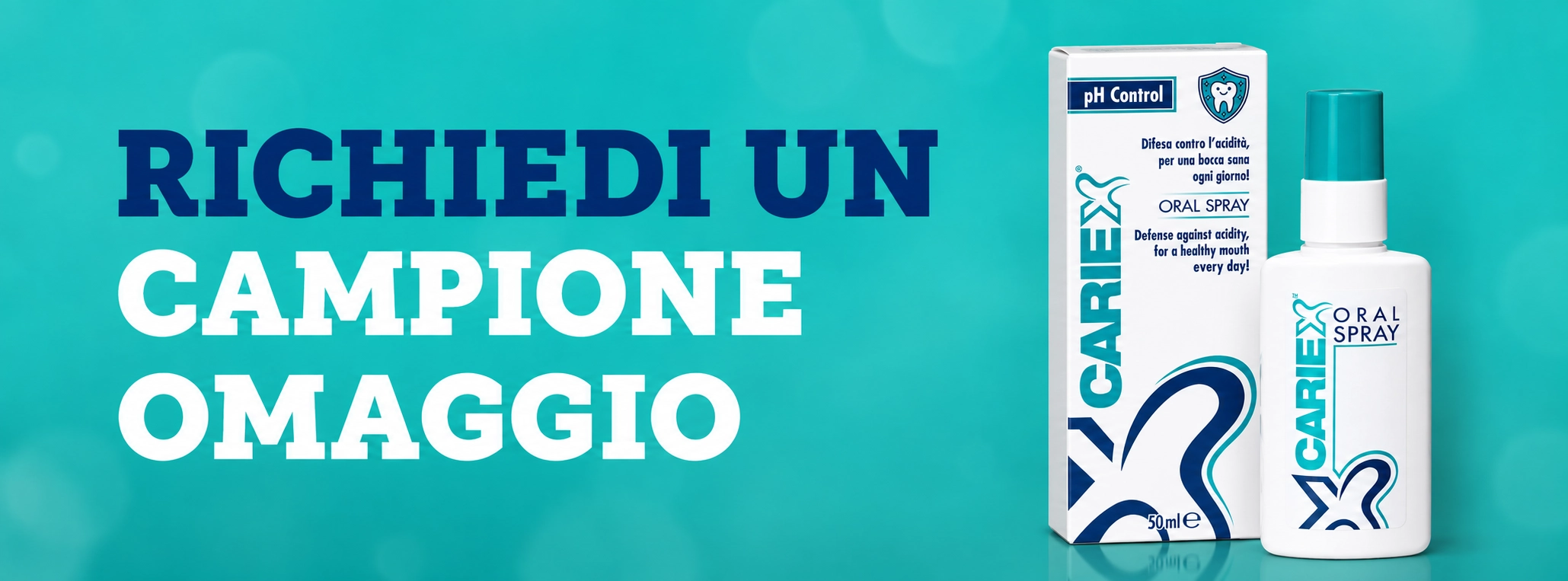
In conclusion, the use of a sodium bicarbonate spray such as Cariex® on the oral mucosa has proven to be above all the most practical and rapid solution; crucially, it allows for the control of the drop in salivary pH following carbohydrate consumption, contributing to the prevention of cavities and dental erosion.
The recommendation is to brush teeth thoroughly with a soft toothbrush before entering the water, spray Cariex® onto the oral mucosa and dental surfaces, and repeat the process every 40 minutes of training.
– Dr. Simone Bergomi –
For questions, please contact: simone.bergomi93@gmail.com
References
“Rinsing with antacid suspension reduces hydrochloric acid-induced erosion”
Maria do Socorro Coelho Alves, Taís Fonseca Mantilla, Enrico Coser Bridi, Roberta TarkanyBasting, Fabiana Mantovani Gomes França, Flávia Lucisano Botelho Amaral, Cecilia Pedroso Turssi.
“The effect of swimming on oral health status: competitive versus non-competitive athletes”
Simonetta D’Ercole, Marco Tieri, Diego Martinelli, and Domenico Tripodi
“The Effect of Swimming on Oral Ecological Factors”
S. D’Ercole, D. Tripodi
“Prevalence of Dentinal Hypersensitivity and Dental Erosion among Competitive Swimmers, Kerala, India”
Arun Rao, Susan Thomas, Jishnu Krishna Kumar, and Vivek Narayan
Author information Article notes Copyright and License information Disclaimer
“Saliva and dental erosion”
Marília Afonso Rabelo Buzalaf, Angélicas Reis Hannas, Melissa Thiemi Kato
“The Status of Mineralized Dental Tissues in Young Competitive Swimmers”
Wojciech Kaczmarek
“Rapid General Dental Erosion by Gas-Chlorinated Swimming Pool Water. Review of the Literature and Case Report”
W Geurtsen
“The Effect of Bicarbonate/Fluoride Dentifrices on Human Plaque pH”
J C Blake-Haskins, A Gaffar, A R Volpe, J Bánóczy, Z Gintner, C Dombi
“The Erosive Effects of Saliva Following Chewing Gum on Enamel and Dentine: An Ex Vivo Study”
E M Paice, R W Vowles, N X West, S M Hooper
“Prevention of Erosive Tooth Wear: Targeting Nutritional and Patient-Related Risks Factors”
M A R Buzalaf, A C Magalhães, D Rios
“Consensus Report of the European Federation of Conservative Dentistry: Erosive Tooth Wear–Diagnosis and Management”
T S Carvalho, P Colon, C Ganss, M C Huysmans, A Lussi, N Schlueter, G Schmalz, R P Shellis, A B Tveit, A Wiegand
“Chapter 9: Acidic Beverages and Foods Associated With Dental Erosion and Erosive Tooth Wear
Thiago Saads Carvalho, Adrian Lussi
“Salivary pH After a Glucose Rinse: Effect of a New Mucoadhesive Spray (Cariex) Based on Sodium Bicarbonate and Xylitol”
G M Abbate, L Levrini, M P Caria
“Effects of tannin-fluoride and milk-fluoride mixture on human enamel erosion from inappropriately chlorinated pool water”
Sumalee Boonviriya, Sissada Tannukit, Suwanna Jitpukdeebodintra
“Rapid and Severe Tooth Erosion from Swimming in an Improperly Chlorinated Pool: Case Report”
Colin Dawes, BSc, BDS, PhD; Carey L. Boroditsky, DMD
“Guidelines for Safe Recreational Water Environments – Swimming Pools and Similar Aquatic Environments” World Health Organization 2006 Edited by the SItI working group – Sports Sciences of the Italian Society of Hygiene, Preventive Medicine and Public Health
“Evidence for biofilm acid neutralization by baking soda”
Domenick T. Zero, DDS, MS ROLE